Key Takeaways
- A riad can earn more without adding rooms: a table and terrace open to visitors, cooking classes, a hammam partnership, a corner of local products.
- Under Law 80-14, food and entertainment are ancillary to accommodation and subject to the laws that govern them: check your authorization before opening to the public.
- Tours, visits and transfers sold on a regular basis fall under Law 11-16: work with a licensed travel agency and licensed carriers.
- With BoxSpot, a riad also stores the bags of travelers who are not staying there; it is paid on every booking, under the partner contract.
A riad or a guesthouse sells nights above all, and that income has a ceiling: the number of rooms, and seasons that do not fill the house all year. Yet you have a kitchen, a terrace, a team that knows the city and travelers who walk past your door without staying with you. Here is how to earn more with what the house already has, and what Moroccan rules require for each idea.
Short answer
A riad can raise its income without adding rooms: breakfast, dinner or a terrace open to outside visitors, cooking classes, a hammam partnership, a corner of local products. Excursions and transfers are sold with licensed providers, because they are regulated activities. Direct bookings let you keep more of each night. With BoxSpot, you can also store the bags of travelers who are not staying with you and who booked online, and you are paid on every booking.
Why look for revenue beyond the rooms?
An empty room on a Tuesday in January never comes back. Extra revenue smooths out the year: it comes from customers who are not necessarily staying with you (travelers passing through, city residents, Moroccan families at the weekend) and puts to work spaces that are quiet during the day, such as the terrace or the lounge.
The law frames these services. Under Law No. 80-14 on tourist establishments, riads and guesthouses provide accommodation and, on an ancillary basis, food and entertainment services, provided they respect the laws that govern them (Article 3). Being classified does not exempt you from any other authorization or license that is required (Article 11). The texts are published on the Ministry of Tourism's legal texts page (in French).
Can you open your table and terrace to people who are not staying with you?
It is often the simplest route, because the kitchen is already running every morning.
- Breakfast by reservation. A traveler staying elsewhere, or who has just checked out, may enjoy a Moroccan breakfast in a quiet patio, booked the day before to avoid waste.
- The house dinner. A single set menu at a fixed time needs less stock than an à la carte menu.
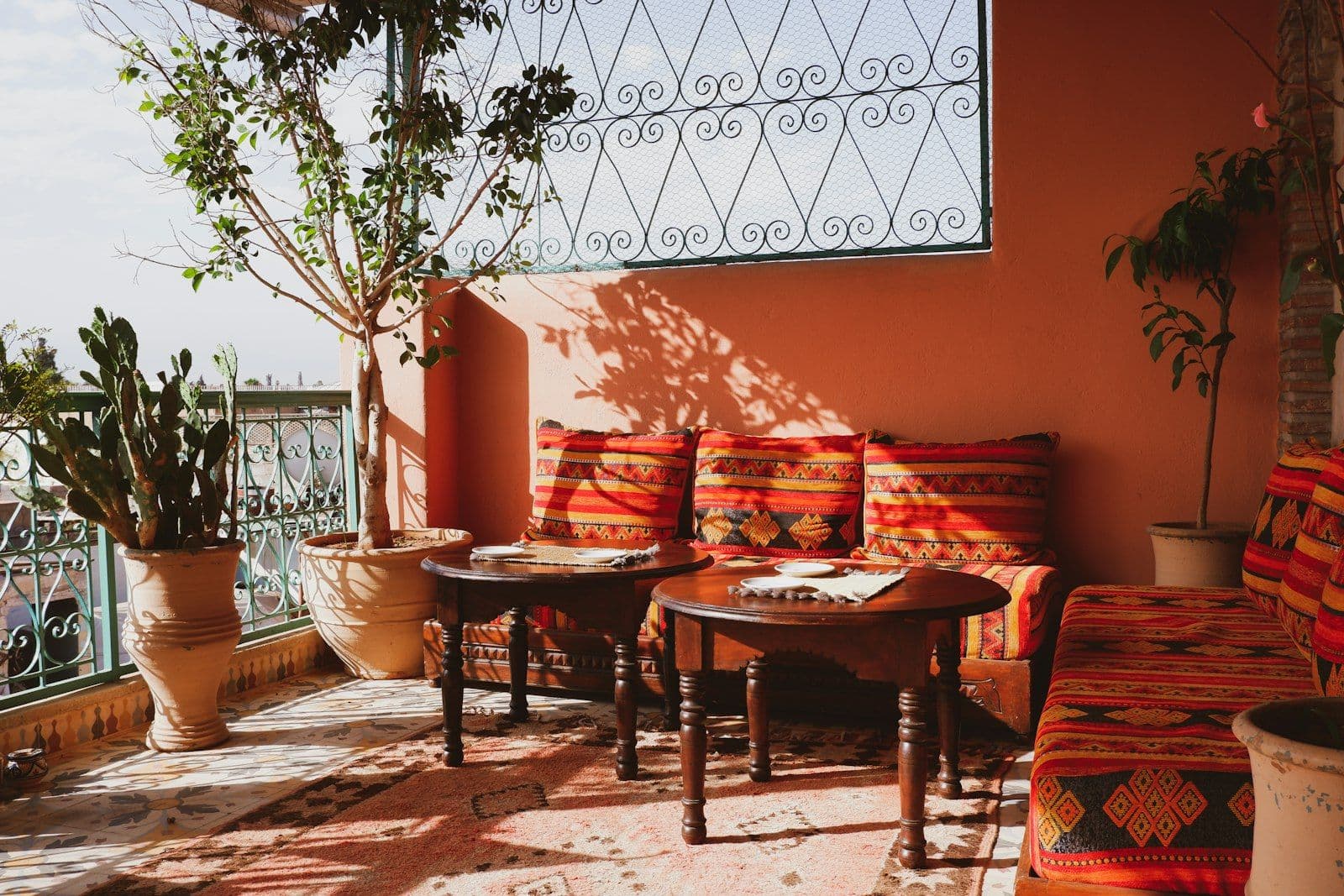
- The terrace at the end of the day. In a medina, a rooftop with a view draws passers-by in for a tea or a juice at sunset.
- Ftour during Ramadan. By reservation, it may appeal to people from the neighborhood as well as to curious travelers.
Before opening to the public, ask the tourism delegation for your region and your municipality what your authorization allows. Law 80-14 already requires you to display prices, including in restaurant rooms, and to give every customer an itemized invoice (Article 17). Finally, set time slots and a number of seats, so the terrace stays pleasant for your guests.
Cooking classes, hammam, massage: selling an experience rather than an object
Many travelers want an activity to talk about back home, and your house can offer it without a big investment.
- The cooking class. Your cook shows how to make a tagine, a pastilla or pastries, sometimes after a trip to the market. In small groups and by reservation, the class is open to your guests and to travelers staying elsewhere, with a price per person and a maximum number of participants.
- Hammam and massage through a partner. Without facilities, do not improvise: make a written agreement with a reputable hammam or spa in the neighborhood that sets prices, time slots and what each side receives.
- Evenings. Music, storytelling or a tea tasting fall under the entertainment provided for by Law 80-14, as long as you respect the neighbors and set hours.
Transfers and excursions: can you sell them yourself?
An airport shuttle, a day in the desert, a tour of the medina: the requests come in every day. But these activities are regulated:
- Law No. 11-16 lists among travel agent activities the organization or sale of tours and visits, and the sale of tourist transport and guide services on those providers' behalf, when carried out habitually and for profit (Article 1). They require a license; the “travel distributor” license is for those who resell such services alongside their main business (Article 3).
- Tourist road transport requires an approval and an authorization for each vehicle, under the specifications published by the Ministry of Tourism (in French). The vehicles concerned are marked, for example with a “Transport Touristique” sign.
- Tourist guides work in a regulated profession (Law No. 05-12).
In practice: check with an adviser what your status allows, work with a licensed travel agency and licensed carriers, and ask to see their authorizations.
Selling local products: a small, well-chosen shelf
Argan oil, amlou, spices, black soap, pottery: your guests take souvenirs home anyway. A shop corner in the lounge spares them a hit-and-miss haggle in the souk.
- Buy from cooperatives and craftspeople you know, and tell their story: that is what sets your selection apart.
- Only put on the label what you can prove (origin, ingredients). A claim nobody can check ends up in the reviews.
- Display prices and favor sizes that slip easily into a suitcase.
Direct bookings or platforms: how do you keep more of each night?
Booking platforms bring visibility, but part of the price of each night goes to them. Every direct booking therefore earns you more at the same rate.
- A website with a booking engine. Google can show free booking links to your own site; if you use a booking engine, ask your provider whether it is connected to Google (Google help on free booking links).
- An up-to-date Google listing. Photos, hours, replies to reviews: that is often where travelers first find you.
- A direct line to past guests. Give satisfied guests an easy way to write to you, on WhatsApp for example.
- A perk rather than a discount. Reread your contracts: some platforms restrict the prices you show elsewhere. A welcome tea or a free late check-out often makes the difference without touching the rate.
When the house is full, early check-in and late check-out can also become paid services, announced clearly at booking.
Storing bags for travelers who are not your guests
You already keep your guests' suitcases between check-out and the evening train or flight. But on the same street, other travelers are looking for the same thing without staying with you: day-trippers, passengers between connections, travelers who arrived too early for their own accommodation.
BoxSpot (boxspot.ma) is a Moroccan luggage storage platform. Travelers book online, on the website or the BoxSpot app, to leave their bags for a few hours or a few days at a nearby partner shop, from 9 MAD per hour per bag. On your side:
- You are notified of every booking.
- At drop-off, you scan the booking's QR code in the BoxSpot Partner app (App Store and Google Play) and take a timestamped photo of the bags.
- You put the bags away in your closed room, out of customers' reach.
- At pick-up, bags are handed back only against the same QR code.
You are paid on every booking; the exact terms are set out in the partner contract the team presents to you before anything is signed. BoxSpot promises no volume: the number of bookings depends on your location and your opening hours. A traveler who comes to drop off or collect a bag also discovers your patio: they may have a tea on the terrace, or come back to stay on a future trip. For the reception side, see our guides hotels and riads: the luggage room as a service and how a luggage storage traveler can become a customer.
Who it suits, and who it doesn't
Luggage storage does not suit every house.
It suits you if
- your riad is on travelers' routes: near a medina gate, a station, a port or a hotel district;
- reception is staffed at regular hours that you can display and keep;
- you have a closed room out of customers' reach (storeroom, service room), separate from your guests' spaces;
- your team can follow a simple procedure at every drop-off and every pick-up.
It does not suit you if
- you have no closed, secure space and the suitcases would end up in the patio;
- reception is often unstaffed, or your hours change from one day to the next;
- your house is at the end of a derb where passing travelers never go;
- your team cannot apply the procedure (scan, photo, return against the QR code) every time.
To join the network, you apply on the partner page; the team gets back to you, checks your space, asks for your documents and presents the contract, then a short training session explains the procedure before activation. Details in our guide becoming a BoxSpot partner.
Is your riad on travelers' routes?
Applying is free: no subscription, no lockers or equipment to buy. A closed room, a smartphone and regular hours are enough. You are paid on every booking, under the partner contract presented before anything is signed.
Become a partnerFrequently Asked Questions
- Law No. 80-14 provides that riads and guesthouses offer food and entertainment as services ancillary to accommodation, subject to the laws that govern them. Before opening your table or terrace to the public, ask the tourism delegation for your region and your municipality what your authorization allows.
- These are regulated activities. Under Law No. 11-16, organizing or regularly selling tours and visits, and selling tourist transport or guide services on those providers' behalf, require a travel agent license; tourist transport also requires an approval. The simplest route is to work with a licensed agency and licensed carriers, or to check which license fits your activity.
- You are paid on every booking; the exact terms are set out in the partner contract the team presents to you before anything is signed.
- Its value lies elsewhere. You already look after your guests' suitcases as part of your hospitality. BoxSpot brings you travelers who are not staying with you and who booked online: you scan their QR code in the BoxSpot Partner app, photograph their bags and hand them back only against the same code.
About the author

Mohamed Aymane SFOULI
CTO & Co-Founder