Key Takeaways
- Fes el-Bali is closed to cars: the taxi stops at a gate and the last few hundred metres are on foot.
- Rabat and Essaouira are the two most suitcase-friendly medinas in the country.
- Marrakech's medina is flat but dense: scooters and cobbles are the real obstacle.
- Ask your riad for a meeting point at a gate — the lanes are poorly mapped.
You book a riad «right in the medina» because that is exactly where you want to sleep. Then you arrive, the taxi stops at a fortified gate, the driver nods towards an alley and says: «it''s in there». What follows is the part of the trip no photograph covers — you, your wheeled suitcase, and six hundred metres of cobbles.
The good news: it is entirely predictable. Medinas are not all alike.
Short answer
Rabat and Essaouira are easy with a suitcase. Marrakech works if you accept cobbles and scooters. Tangier, Tetouan and Chefchaouen climb and involve steps. Fes el-Bali is the extreme case: no car enters, and everything moves on foot, by mule or by handcart. In every city, the taxi stops at a gate — it is the last 200 to 600 metres that decide how your arrival goes.
Fes el-Bali: the one medina where the question does not even arise
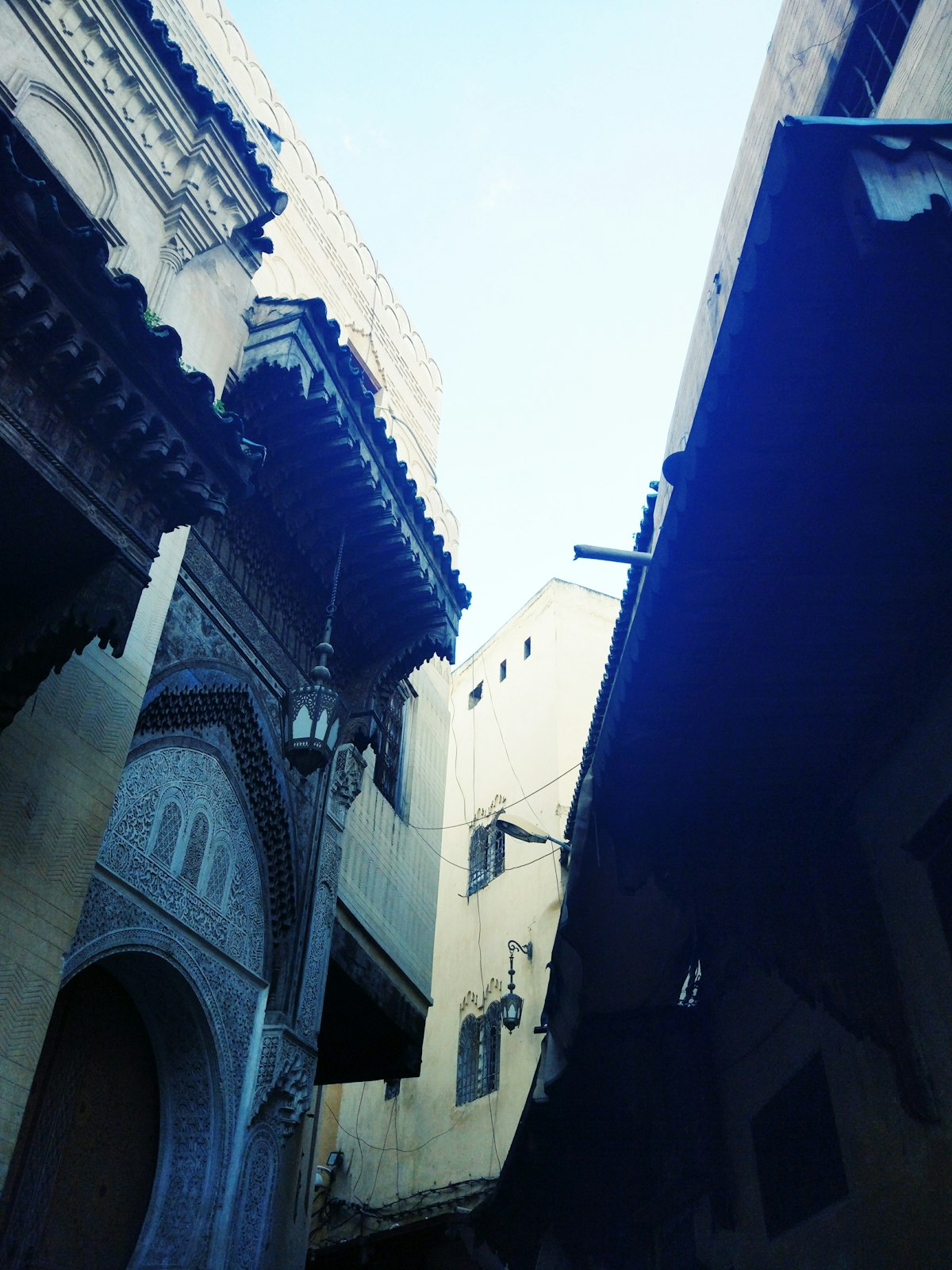
It is the largest car-free urban area in the Arab world: thousands of lanes, no vehicles, mules and handcarts moving everything. It is also on a slope — the medina drops towards the river — and the paving is uneven, broken up by steps.
Where the taxi stops: at a gate. Bab Boujloud (the blue gate, west side) is the famous one, but not always the closest to your riad. Bab Rcif, more central, and Bab Ftouh to the east serve other quarters.
The move that saves the day: ask your riad the night before which gate to be dropped at, and whether they send a porter. Most do — a man with a cart meets you and knows the way. Agree the tip before setting off.
Verdict: backpack or soft bag, fine. Hard wheeled suitcase, workable on the main arteries and exhausting the moment you leave them.
Marrakech: flat, but dense
Unlike Fes, the Marrakech medina is broadly flat. The obstacle is not the gradient, it is the density: narrow lanes, scooters at speed, and cobbles that finish off cheap wheels.
Taxis drop at the gates — Bab Doukkala, Bab Laksour, Bab Aghmat — and vehicle access around Jemaa el-Fna is restricted. Count on 200 to 500 metres on foot every time.
Tangier: it climbs
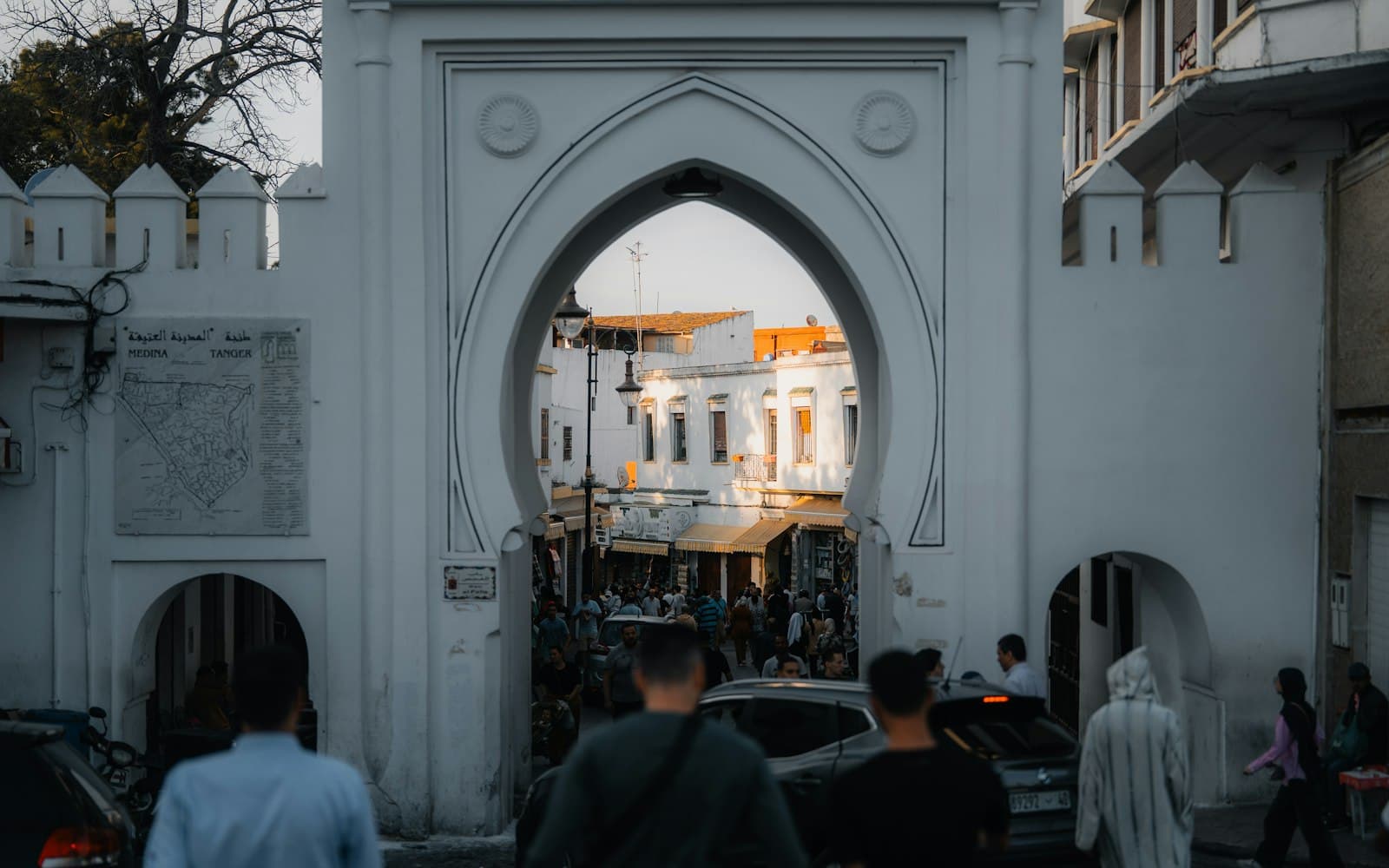
Tangier''s medina starts at the port and rises to the kasbah. The main artery, Rue Es Siaghine, stays manageable, but turn towards the kasbah and you meet stairs. The port is ten minutes'' walk from the Grand Socco — ten minutes uphill, with your things.
Rabat: the reassuring exception
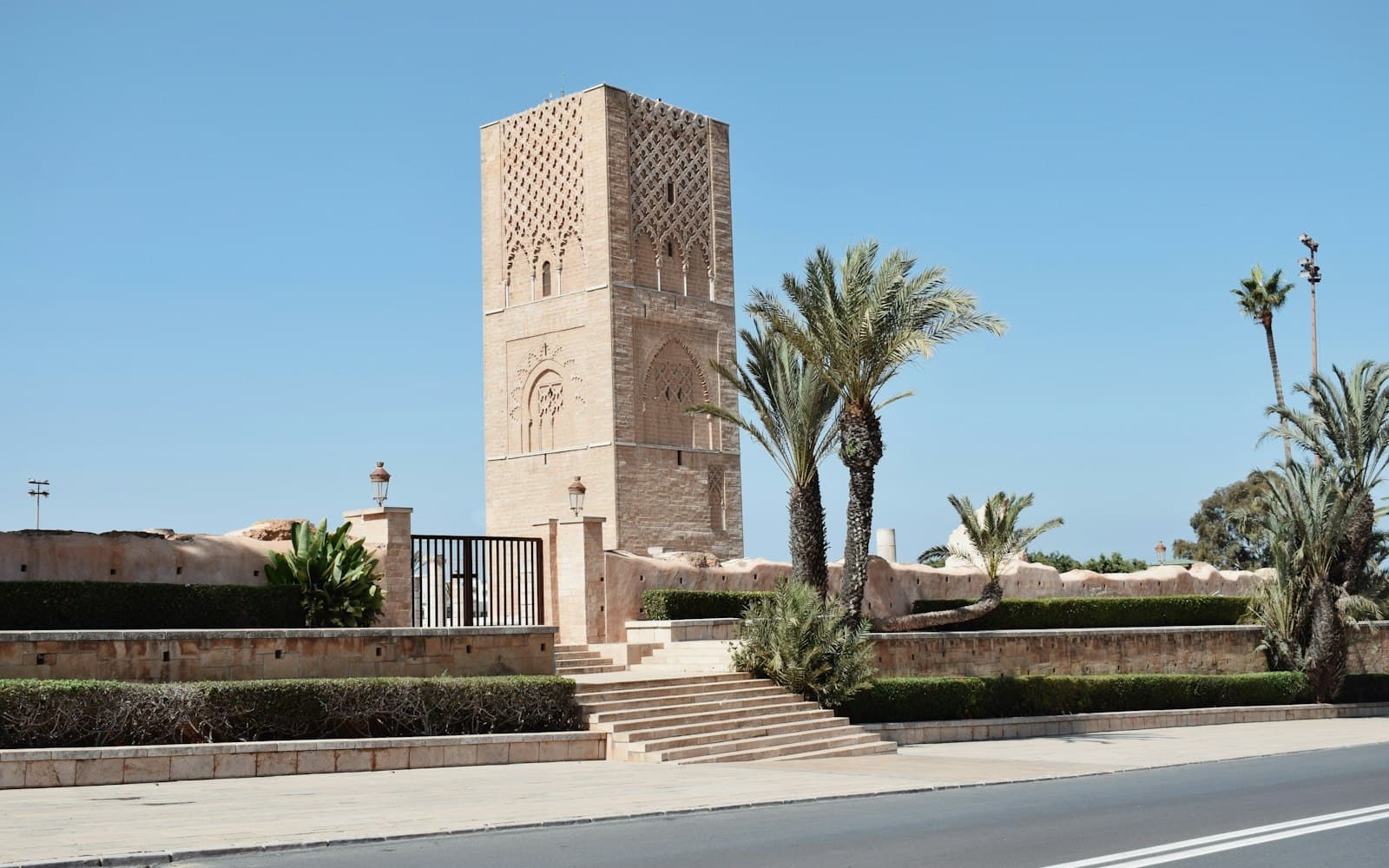
Rabat''s medina is flat, straight and wide. Rue Souika and Rue des Consuls are effortless, suitcase included. If you want the medina experience without the Fes logistics, this is the city.
The rest, in one line each
Essaouira — the easiest in the country: flat medina, wide avenues. The only enemy is wind-blown sand.
Chefchaouen — built on a mountainside: steps everywhere. Backpack, or stay in the lower town.
Tetouan — a very narrow UNESCO medina, steep in places, with covered passages.
Meknes — more open than its neighbours, no particular difficulty.
Four rules that prevent a bad arrival
Ask for the gate, not the address. Medina lanes are poorly mapped and apps get lost in them. Your accommodation should give you a meeting point at a gate the driver knows.
Arrive in daylight. A medina is hard to read after dark when you are seeing it for the first time, and the porters are gone.
Cobbles eat wheels. Over three days, a soft bag on your shoulder will cost you less than a hard case dragged across uneven slabs.
Do not sightsee with your luggage. It is the classic arrival-day and departure-day mistake: crossing the medina loaded, when you could have crossed it free.
The blind spot: the day you do not have a room yet
The medina is never really the problem. The problem is the window where your bags have nowhere to go: you landed at 9am and the riad takes you at 3pm, or you handed the room back at noon and your train leaves in the evening. In both cases you are about to do the medina with a suitcase — the only way to do it badly.
BoxSpot partner shops sit exactly where that happens:
Fes — a point two minutes from the Chouara tanneries, deep in the medina, open 9am-6pm seven days a week.
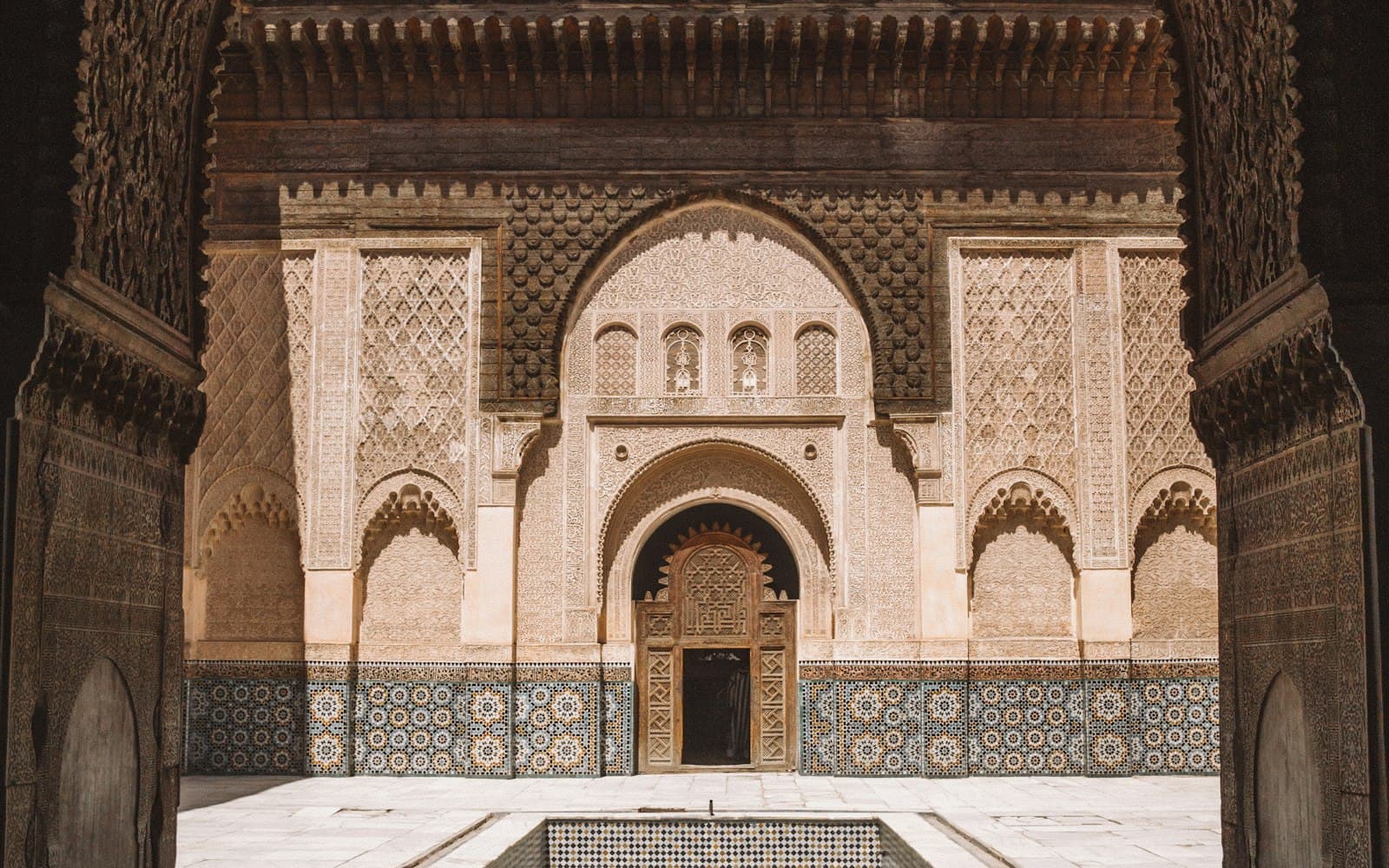
Marrakech — one three minutes from the Ben Youssef Madrasa (closed Sunday) and one three minutes from Bab Aghmat, open daily, right where taxis drop.
Tangier — a point 200 metres from the Grand Socco, ten minutes from the port, open 10am-11pm.
Rabat — open 8am-10pm, seven days a week, 1.2 km from Rabat-Ville station.
The principle is simple: drop at the edge of the medina, cross it with your hands free, collect before moving on. Budget 9 MAD an hour per bag, capped at 59 MAD a day. The shopkeeper scans a QR code and takes a timestamped photo; nothing leaves without that QR.
Cross the medina, not your suitcase across the medina
Points in Fes, Marrakech, Tangier and Rabat. Exact address and hours shown before payment.
See the points by city
Read next: what closes on which day in Morocco.
Frequently Asked Questions
- No. Fes el-Bali is the largest car-free urban area in the Arab world. Taxis stop at the gates — Bab Boujloud, Bab Rcif, Bab Ftouh — and everything inside moves on foot, by mule or by handcart.
- Rabat and Essaouira. Both are flat, with wide, straight streets. At the other end, Chefchaouen and Fes el-Bali involve steps and steep gradients.
- Ask your accommodation the night before which gate to be dropped at and whether they send a porter with a cart. Since the lanes are poorly mapped, a meeting point at a gate the driver knows beats an address.
- At a partner shop on the edge of, or inside, the medina: two minutes from the Chouara tanneries in Fes, three minutes from the Ben Youssef Madrasa or Bab Aghmat in Marrakech, 200 metres from the Grand Socco in Tangier. Budget 9 MAD an hour per bag, 59 MAD a day maximum.
About the author

Mohamed Aymane SFOULI
CTO & Co-Founder
Nearby drop-off points
Find a drop-off point in Fes